Ripple (XRP) Surge From The Past Week Fades Away
XRP sinks down to a slumber after one week of top-notch performance


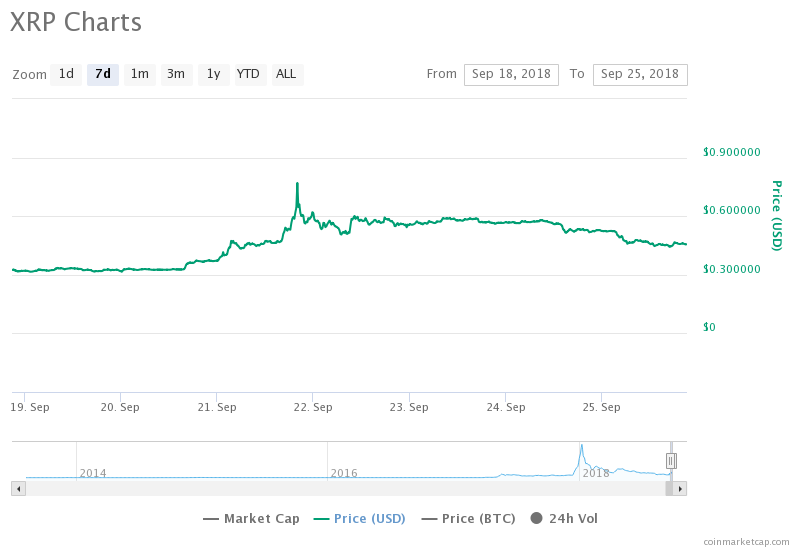
XRP, the native cryptocurrency of Ripple Labs has exhausted itself after a week of gains. The currency saw a high of 77 cents but couldn’t keep the position and is down to 45 cents as of today.
PNC‘s join-in to Ripple group and the pre-launch hike of xRapid played a major role in the mini bull-run that XRP experienced past week, but the wheels have now turned. As expected after a period of high value run of a cryptocurrency, XRP’s price is dropping and is currently on a negative value of 13.20%.
The dreams of re-acquiring the high of $3.65 XRP witnessed back in January has turned to mist once again taking investor’s excitement of ‘finally some good news’ from crypto markets with it. Below is the XRP chart for the past 7 days. Notice the Eiffel shaped peak? That was where all the good things happened.
Loosing market cap has also taken away XRP’s freshly acquired second place on cryptocurrency list too. Ethereum is back on second with Bitcoin being the unchallenged winner with a huge margin for almost a year now.
Like most of the other falls and s-curves, there is no documented or solid evidence that can explain this drop. It’s all about investors. One day the trust in the currency takes it to the high we wait for, while the next day sees a market crash because one cash-out from an investor starts a domino fall that cripples the currency to the rock bottom. Without ties to solid assets, crypto volatility never was or never will be predictable or worse: explainable. No one knows what’s about to happen. Not even the people who dedicate their time to find this out.
There is no apparent correlation between cryptocurrencies. No solid asset, no fiat currency links them except their technology which is essentially the same. Regardless of this fact, every time one currency experiences a surge or a brutal fall, many currencies follow the similar trend. Analysis tools like The Pearson Correlation Coefficient can analyze the dramatic ‘combined’ ups and downs but cannot explain why.
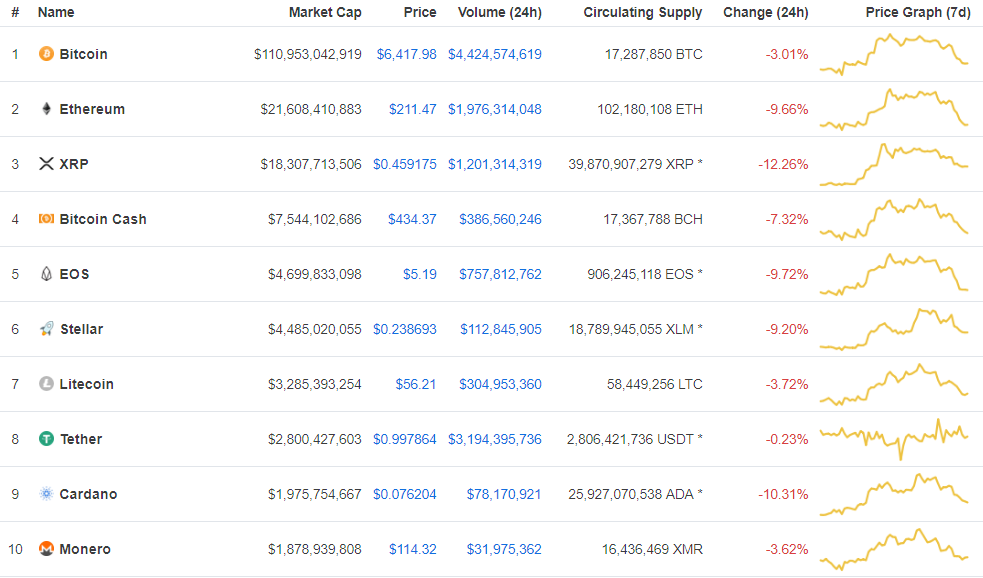
As of today, top 10 currencies are doing negative on the trade market as per CoinMarketCap.
Why? No one knows.
One theory is that Jed McCaleb, Ripple co-founder, who owns billions of dollars worth of XRP, has been ramping up sales of his holdings.
Whatever is going down in markets today, as far as XRP is concerned, Swell, an event hosted by Ripple, that connects the world’s leading experts on policy, payments and technology for the most immersive dialogue on global payments will be held in San Francisco from October 1-2. With the former President Bill Clinton as keynote speaker and an audience that includes the most distinguished guests from around the world, opportunity for a bull run may arise. To all the investors out there, keep your fingers crossed.